You have a pattern, needles, and a wall of yarn in front of you. Two balls look nearly identical: same thickness, same colour, similar label. One is pure wool and costs a good deal more. The other is acrylic and feels almost slick between your fingers. Which one comes home with you?
Both can be right, just not for the same project. Wool and acrylic behave differently on the needles, in the wash, and after a year of wear, and knowing where they diverge saves you from a first jumper that sags, a scarf that itches, or a hat that comes out of the machine the size of a teacup.
Warmth: two different kinds of cosy
Wool fibres are naturally crimped, so a woollen yarn traps thousands of tiny pockets of air that hold warmth close to your body. Wool also absorbs moisture vapour from your skin and releases it again, which is why a wool hat stays comfortable on a brisk walk even when you're slightly damp. Acrylic insulates well when it's dry, but it doesn't breathe in the same way. Wear an acrylic hat up a long hill and you may notice a clammy feeling that wool never gives you.
Simple rule: if the item sits next to skin in cold, changeable weather — hats, mittens, scarves, walking socks — wool has the edge. For a throw over the sofa, a cushion cover or a blanket layered over a duvet, acrylic's warmth is more than enough.
Durability: what survives twenty washes
Wool has memory. Knit a ribbed cuff in wool and it springs back into shape after every wear, which is why cuffs, neckbands and hems hold up so well. Its weak points are moths and abrasion, so heels and underarms wear through first. Superwash wool is treated to resist felting; untreated wool will felt if you wash it hot and agitate it, which is either a disaster or a technique, depending on what you intended.
Acrylic is strong for its weight, takes dye brilliantly (those neon shades are almost always synthetic), resists moths and never felts. It also stretches with wear and doesn't always spring back, so cuffs can go baggy and a heavy blanket can gradually grow. Both fibres pill; acrylic pills tend to cling because the fibres are strong and don't break off as readily, while wool pills work loose over time.
Where you want kit that gets heavy use — school gloves, a dog-walking hat, a pram blanket — look at blends. Wool with nylon is the classic sock combination, and wool with acrylic gives you some of wool's warmth and spring at a friendlier price.
Cost: compare metres, not balls
Acrylic is usually the cheapest option, wool the dearest, but a ball isn't a fixed amount of knitting. A large acrylic ball can hold far more length than a smaller, pricier wool ball, so check the metres printed on the label and compare cost per metre if you're working to a budget. Broadly, from cheapest to dearest: basic acrylic, wool-acrylic blends, superwash wool, then merino, breed-specific and hand-dyed yarns.
Two habits save both money and heartbreak. Buy one extra ball in the same dye lot for anything bigger than a scarf, because colours can shift slightly between batches. And knit a tension swatch before you cast on two hundred stitches; the swatch costs you an evening, a wrong-sized garment costs you a month.
Care: the part beginners often discover too late
Looking after wool
Cool hand washing or a wool cycle, a detergent without enzymes or bleach, no wringing and no tumble drying. Press the water out inside a towel and dry the piece flat, reshaping it as it lies. Store it clean, and keep moths away with cedar or lavender. If you have sensitive skin or a known wool allergy, test a small swatch against your wrist before committing to a whole garment; merino and alpaca blends are usually kinder against the skin than coarser wools.
Looking after acrylic
Machine washable is the whole point. Warm water is usually fine, but heat is acrylic's enemy: a hot wash or a hot tumble can stretch it permanently, and a hot iron can melt the fibre outright. Air dry where you can, use the lowest setting if you must tumble, and press with steam rather than direct heat. Acrylic also sheds microfibres in the wash, so a filter bag is worth considering if that bothers you.
How each one feels to knit
Wool has a little grip, so stitches sit where you put them and don't slide off the needle in the middle of a row. Its slight halo softens uneven tension, which is kind to beginners, though it can also disguise a dropped stitch. Wooden or bamboo needles pair well with it.
Acrylic is smoother, often squeakier, and slides easily on metal needles. It shows stitch definition crisply, which helps you learn to read your knitting — and shows every mistake just as clearly. It has less give, so if you rip back a section that's been stretched on the needles, it may not return fully to its original shape.
Matching fibre to your first few projects
- A garter-stitch scarf: chunky acrylic or a wool-acrylic blend in a light colour, so you can see your stitches and forgive your tension.
- A ribbed hat in the round: wool or a wool-rich blend, because ribbing needs the fibre's memory to stay snug.
- Baby and child items: superwash wool or a soft acrylic blend, so the finished piece can go in the machine without ceremony.
- A big blanket: acrylic, for cost, colour range and easy care.
- Anything worn at the neck: merino or a merino blend if standard wool feels prickly.
- Practising new stitches: whatever is cheapest in a smooth, light-coloured yarn. Learning shouldn't cost much.
Try it before you commit
Buy two balls of the same weight, one wool and one acrylic, and knit a small square in each. Wash them the way you'd wash the finished item, dry them flat, and compare how they feel, how they hold their shape and how they've pilled. Keep the squares labelled in your project bag as a reference for next time.
Half an hour of swatching tells you more than any label, and it means your first proper knit is made in a yarn you already know you like.
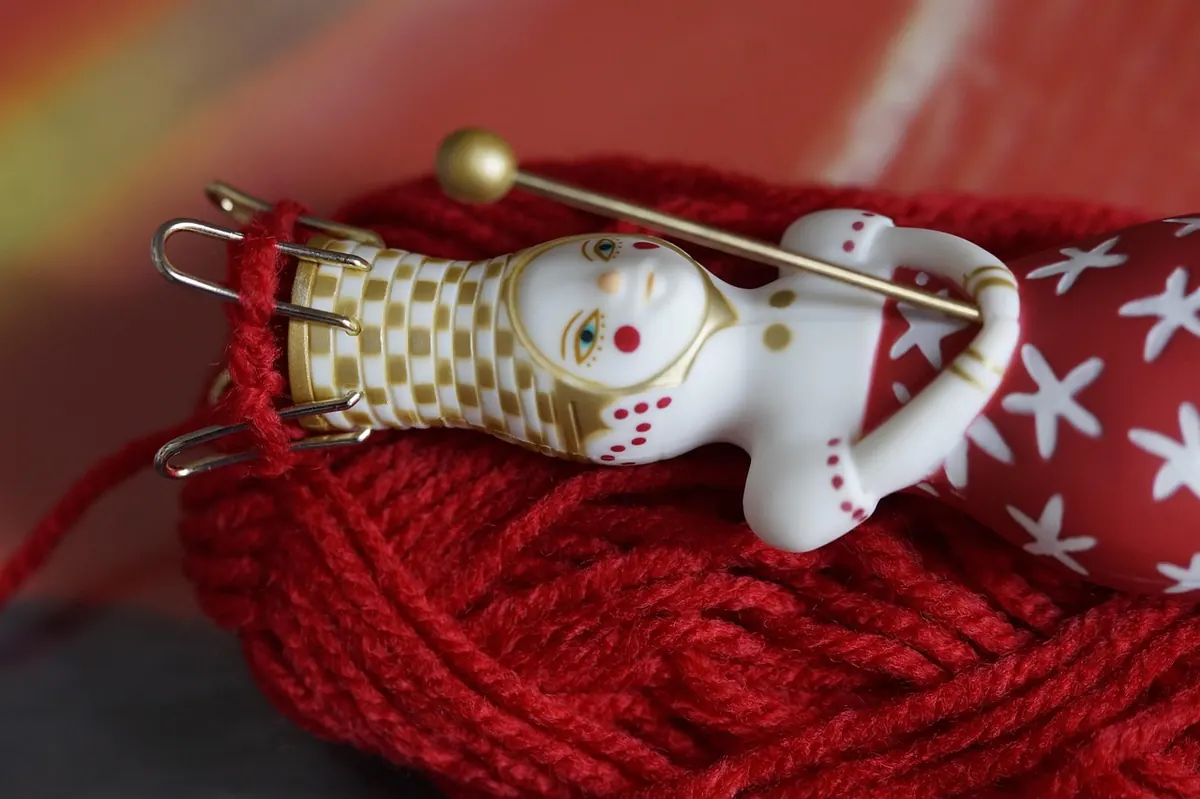
Photo: Efraimstochter / Pixabay